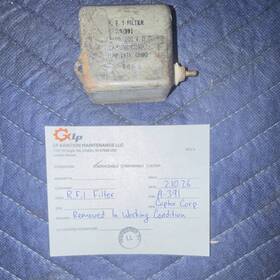
( Brand: Captor Corp ), ( Manufacturer Part Number: A-391 ), ( Part Type: Filter )
Review CAPTOR CORP R.f.i Filter Used Good Condition
The **Captor A-391 RFI Filter** is a high-performance, precision-engineered solution designed to eliminate radio frequency interference (RFI) and electromagnetic noise from sensitive audio and video equipment, ensuring crystal-clear signal integrity in demanding professional and broadcast environments. Built with a robust, compact yet durable construction, this filter is specifically crafted to protect critical components such as microphones, cameras, and audio interfaces from unwanted electromagnetic radiation, which can degrade performance, introduce static, or even cause equipment malfunctions. The A-391 employs a sophisticated multi-stage filtering architecture, combining high-quality ferrite beads, inductors, and capacitors to effectively attenuate a broad spectrum of RF interference ranging from low-frequency hum to high-frequency digital noise without compromising the integrity of the audio or video signal. Its wide operating frequency range, typically spanning from DC up to several hundred megahertz, makes it ideal for applications in live sound reinforcement, broadcast studios, film production, and professional AV setups where signal purity is paramount. The filter s low insertion loss ensures minimal signal degradation, while its high attenuation capability often exceeding 40 dB at problematic frequencies guarantees that even the most stubborn sources of interference are neutralized. Constructed with high-grade materials, including corrosion-resistant metal housings and precision-molded connectors, the A-391 is built to withstand rigorous use in environments where reliability is non-negotiable. Whether installed inline with a microphone cable, a camera feed, or a professional audio interface, this filter provides a seamless and effective barrier against electromagnetic intrusion, allowing operators to focus on delivering pristine sound and video without the distraction of unwanted interference. Its modular design also makes it easy to integrate into existing systems, offering flexibility for both permanent installations and temporary setups. In summary, the Captor A-391 RFI Filter is an indispensable tool for professionals who demand the highest standards of signal quality, combining engineering precision with practical durability to ensure interference-free performance in every application.
**Pros and Cons of buying a Captor A-391 RFI Filter**
The **Captor A-391 RFI Filter** is designed to reduce radio frequency interference (RFI) in audio systems, particularly in microphones, instruments, and other audio devices. Below is a detailed breakdown of its advantages and disadvantages.
### **Pros**
1. **Effective RFI Reduction** The filter is specifically engineered to block unwanted radio frequency signals that can cause hum, buzzing, or distortion in audio recordings or live performances. This is particularly useful in environments with strong wireless signals (Wi-Fi, cell towers, Bluetooth devices).
2. **Compact and Portable Design** The A-391 is small and lightweight, making it easy to carry and install in various setups, including microphones, guitar cables, or other audio inputs.
3. **Wide Frequency Range Coverage** It is designed to suppress a broad spectrum of RF interference, from low-frequency hum to higher-frequency noise, providing broad protection for audio signals.
4. **Easy Installation** The filter is typically installed inline with an audio cable (e.g., between a microphone and an interface or amplifier). Most users find it straightforward to connect without requiring advanced technical skills.
5. **Cost-Effective Solution** Compared to more complex shielding or grounding solutions, the A-391 offers a budget-friendly way to mitigate RFI issues without significant investment.
6. **Compatibility with Various Devices** It can be used with a wide range of audio equipment, including microphones, instruments, and even some audio interfaces, making it versatile for different applications.
7. **Durable Construction** The filter is built to withstand regular use, with sturdy connectors and a robust casing that prevents damage from bending or excessive handling.
8. **Minimal Signal Loss** Unlike some RFI solutions that introduce significant attenuation, the A-391 is designed to pass through the desired audio signal with minimal interference, ensuring clarity.
---
### **Cons**
1. **Limited to RFI Only** The filter does not address other types of interference, such as electrical noise from poor grounding, hum from faulty cables, or mechanical vibrations. If these issues persist, additional solutions may be required.
2. **Not a Universal Fix** While effective for many RFI problems, extreme or highly localized interference (e.g., nearby transmitters or industrial electromagnetic fields) may require stronger shielding or alternative solutions.
3. **Potential for False Sense of Security** Some users may assume that installing the filter resolves all audio issues, only to later discover that other factors (e.g., cable quality, device grounding) were contributing to the problem.
4. **May Require Additional Grounding** In some cases, the filter works best when paired with proper grounding of audio equipment. If the setup lacks adequate grounding, the filter s effectiveness may be reduced.
5. **Single-Point Failure** Since the filter is installed inline, if it fails, the entire signal path is disrupted until replacement or repair occurs. This is less of an issue with built-in shielding solutions.
6. **Mixed Reviews on Effectiveness in Extreme Cases** Some users report that while the filter helps, it does not completely eliminate RFI in highly contaminated environments (e.g., near airports, cell towers, or industrial areas).
7. **Noisy or Cheap Alternatives May Exist** Some budget or generic RFI filters on the market may not perform as reliably as the Captor A-391. However, the A-391 is generally well-regarded for its quality.
8. **Not Suitable for All Audio Devices** While it works well with most microphones and instruments, some high-end or specialized audio devices may have their own built-in RFI protection, making the filter redundant.
---
### **Conclusion**
The **Captor A-391 RFI Filter** is a practical and effective tool for reducing radio frequency interference in audio setups. Its compact size, ease of use, and broad frequency coverage make it a valuable addition for musicians, podcasters, voice-over artists, and audio engineers working in environments with wireless signals. It is particularly useful for those who experience hum, buzzing, or static in their recordings or live performances due to RFI.
However, it is not a universal solution. Users should ensure that their setup is properly grounded and that other potential sources of interference (e.g., faulty cables, poor shielding) are addressed. While the filter excels in many common scenarios, extreme RFI conditions may require additional measures.
### **Recommendation**
If you frequently encounter RFI issues in your audio recordings or live performances such as hum from nearby Wi-Fi routers, cell towers, or Bluetooth devices the **Captor A-391 RFI Filter** is a worthwhile investment. It is especially recommended for:
- Musicians using wireless microphones or instruments.
- Podcasters and voice-over artists recording in home studios with potential RF sources.
- Live performers in venues with strong wireless signals.
- Audio engineers troubleshooting unexplained noise in recordings.
For users with severe or persistent RFI problems, consider pairing the filter with other solutions like:- High-quality shielded cables.
- Proper grounding of audio equipment.
- Additional shielding (e.g., Faraday cages for sensitive devices).
Overall, the A-391 is a reliable and affordable option for mitigating RFI, and its benefits often outweigh its limitations for most users. If your primary issue is radio frequency interference, this filter is a strong recommendation.
Details:
part #: a391 prices
- $39.20-$84.00
specifications comnavavioni:
- brand: Captor Corp
- mpn: A-391
- part type: Filter
seller comnavavioni:
- city: Linden, New Jersey
- rating: 0.0%
- # reviews: 0
returns comnavavioni:
- policy: No Returns
general comnavavioni:
- Aviation Parts Accessories > Avionics > NAV/COMs
- condition: Used
payments comnavavioni:
- other
- credit card: Discover
- wallet: Apple-pay
offer comnavavioni:
- best offers: True
- started: February 10, 2026
- sold: 0
- quantity: 1
- availability: In Stock
- options: Ship-to-home
shipping comnavavioni:
- carrier: USPS
- cost: $8.35
- class: Standard
- service: USPS Ground Advantage
- type: Calculated
- transit: 4-13 Days
Captor Corp A-391 Is Similar To:
- 08-01142-001 A-5438a Filter 08-01142-001 Captor Corp (21.6% similar) ...(February 3rd, 2018)